Strain
Designing a Behavioral Performance Engine, Not Just a Fitness App
Strain is a fitness accountability platform built around one core idea:
What gets measured publicly gets improved.
Unlike traditional fitness trackers that focus on passive data display, Strain transforms health data into competitive performance scoring. The result is a system that motivates through visibility, comparison, and structured behavioral nudges.
I built Strain from concept to execution. Product strategy, UX architecture, system logic, and behavioral design.
The Problem
Most fitness apps fail for one reason.
They track.
They don't drive behavior.
Users open the app, view stats, and leave. Motivation fades because there is no external pressure, no structure, and no meaningful feedback loop.
The question was simple.
How do we turn raw health data into daily performance accountability?
The Core Concept
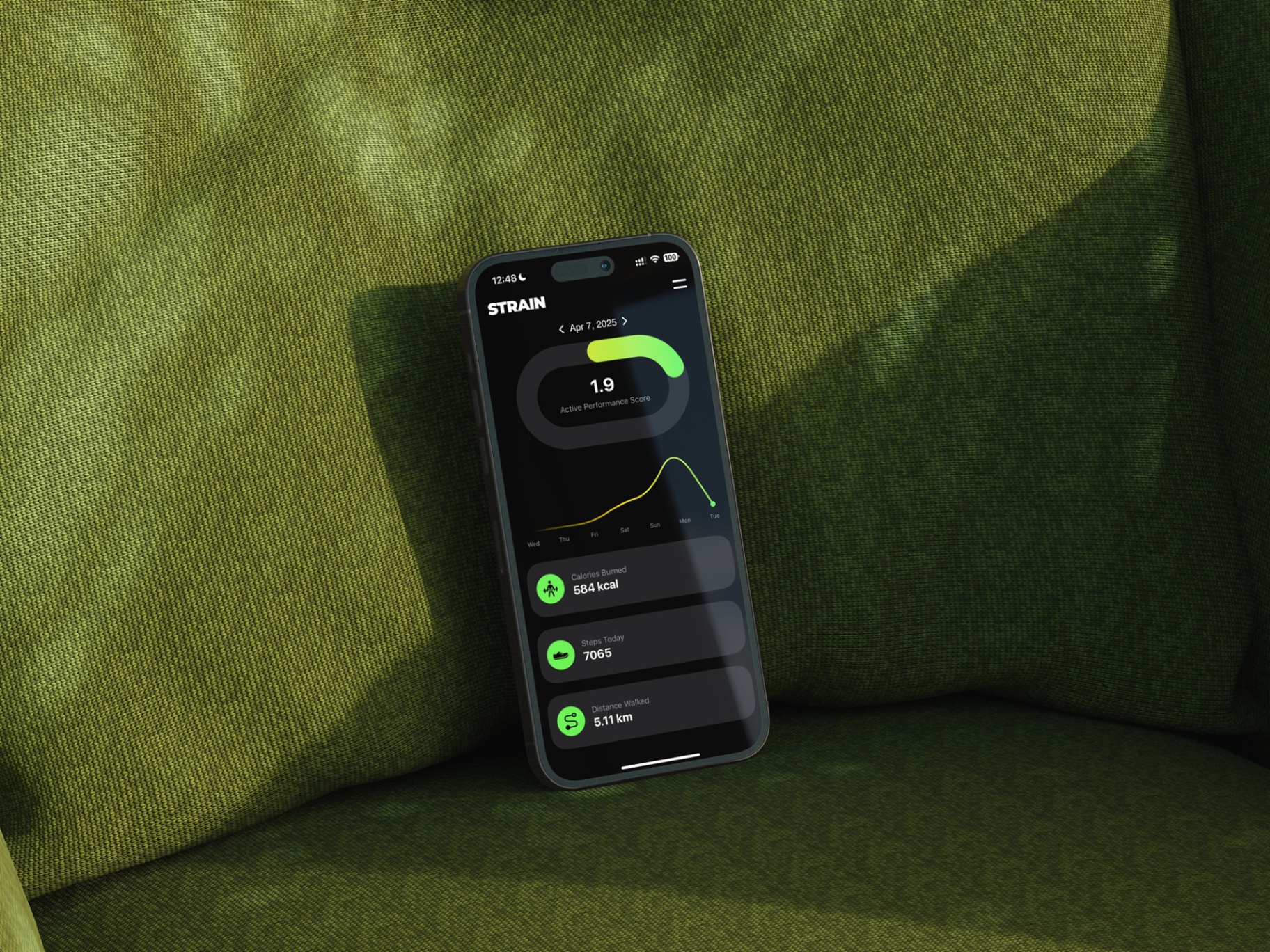
Strain converts calories burned into a normalized performance metric called APS.
3000 calories equals 10.0 APS.
This single scoring system simplifies complex health data into a competitive, comparable daily score.
Instead of showing numbers that users don't interpret emotionally, Strain shows performance.
My Role
Founder and Product Architect
- Defined the APS scoring model
- Designed the full user journey
- Built group-based leaderboard mechanics
- Structured behavioral push systems
- Integrated HealthKit and wearable data
- Designed scalable backend-controlled milestones
- Led UI and interaction design
Strain was designed as a system. Not a feature list.
Design Philosophy
1. Visible Performance Drives Action
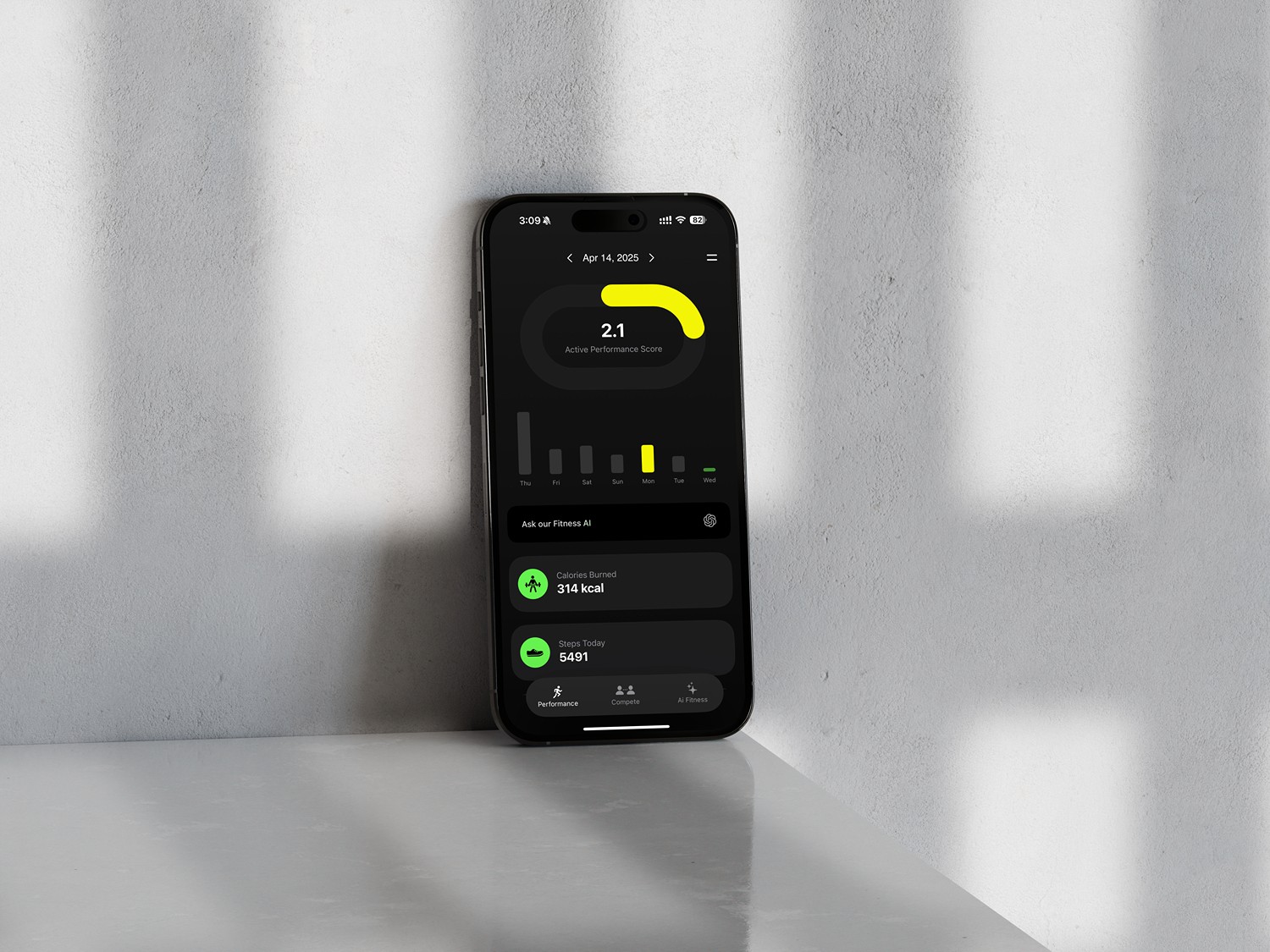
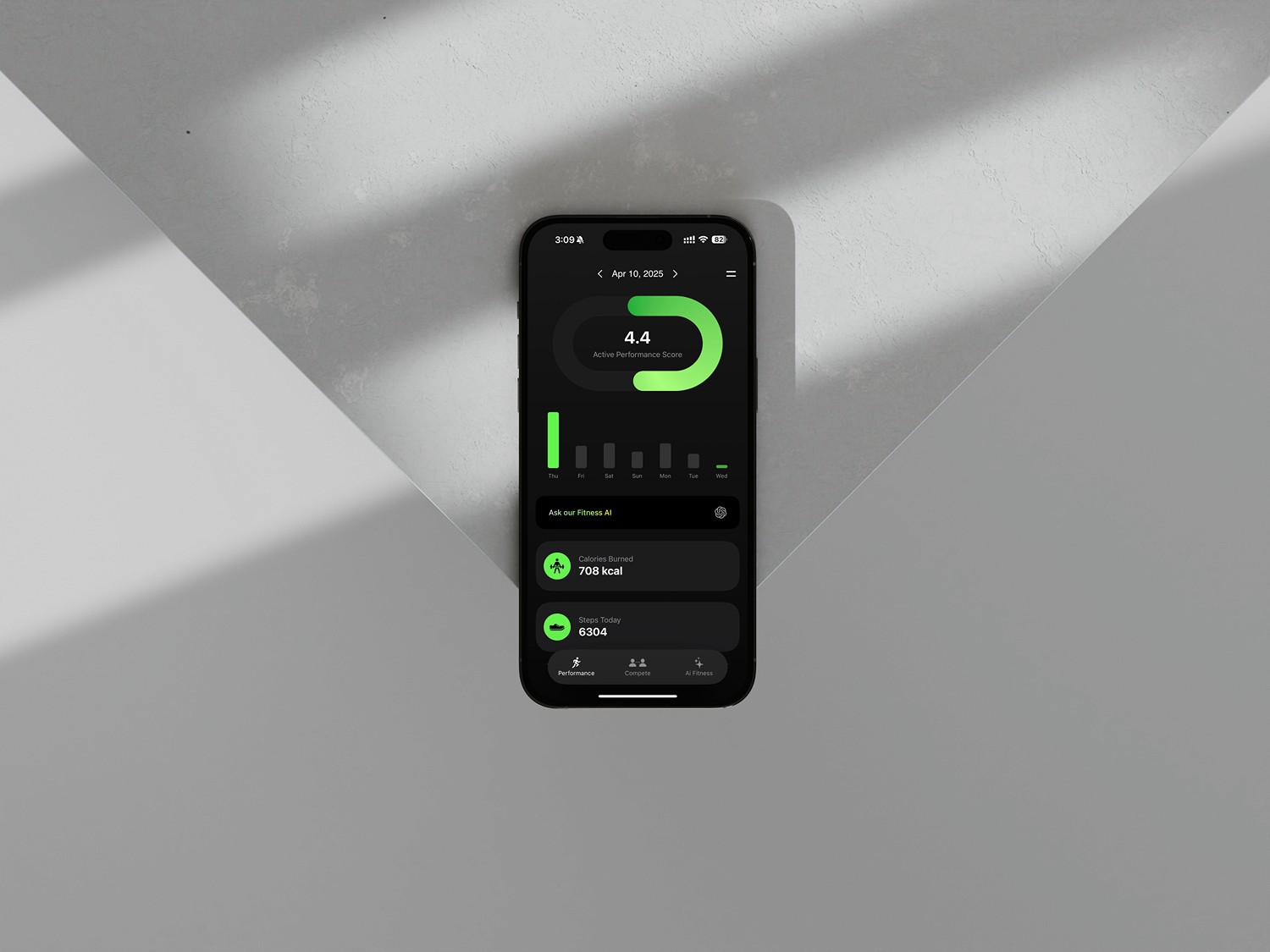
At the top of the interface sits a daily progress ring. Not steps. Not charts. A clear, visual representation of how close the user is to their daily 10-point goal. The interface communicates one thing. Are you winning today?
2. Social Accountability Multiplies Motivation
Users join private or public groups. Daily rankings are calculated automatically based on APS score. This introduces peer comparison, micro-competition, social pressure, and daily reset urgency. Motivation shifts from internal to visible.
3. Backend-Controlled Motivation Loops
Strain does not rely on static notifications. Milestone triggers are controlled from the backend, allowing dynamic score-based push messages, delayed motivation nudges, inactivity alerts, and time-window constraints. Behavioral triggers are adjustable without app updates. Design meets system architecture.
4. Simplicity Over Data Overload
Instead of overwhelming users with charts, Strain focuses on one daily score, one leaderboard, and one clear progress indicator. Complexity is hidden. Performance is highlighted.
Technical Foundation
- HealthKit integration for calorie data
- Wearable support including third-party fitness devices
- Real-time APS calculation
- Firestore-based milestone configuration
- Dynamic group membership structure
- Local and remote push orchestration
The infrastructure was built to scale before growth.
Outcome
Strain reframes fitness tracking as daily performance scoring. It transforms passive health data into competitive accountability.
More importantly, it demonstrates how behavioral design, data architecture, and UX strategy can merge into a cohesive product system.
Reflection
Strain reinforced a principle central to my work:
Design is not about interfaces.
Design is about behavior.
When metrics are simplified, visibility is introduced, and systems are structured correctly, motivation becomes engineered rather than hoped for.